What Is a Mortise Lock and Why Commercial Properties Depend on It
A mortise lock is a multi-component lockset installed inside a rectangular pocket machined into the door's edge rather than surface-mounted through a simple borehole. Because the hardware is fully recessed, the load of a forced push or pull is distributed across the entire door stile instead of concentrated at a few screws — a critical advantage for heavy-traffic commercial entries. Mortise lock sets also house multiple functions in one body: a spring latch for hands-free closing, a deadbolt throw for after-hours security, an anti-friction latch tongue, and — depending on the trim — lever handles, thumbturns, and key cylinders on both faces. ANSI/BHMA grading divides commercial locksets into Grade 1 (the most demanding, rated for 250,000 cycles and built for high-traffic public buildings), Grade 2, and Grade 3. Nearly every application Houston Pro Locksmith handles in commercial settings calls for Grade 1 hardware.
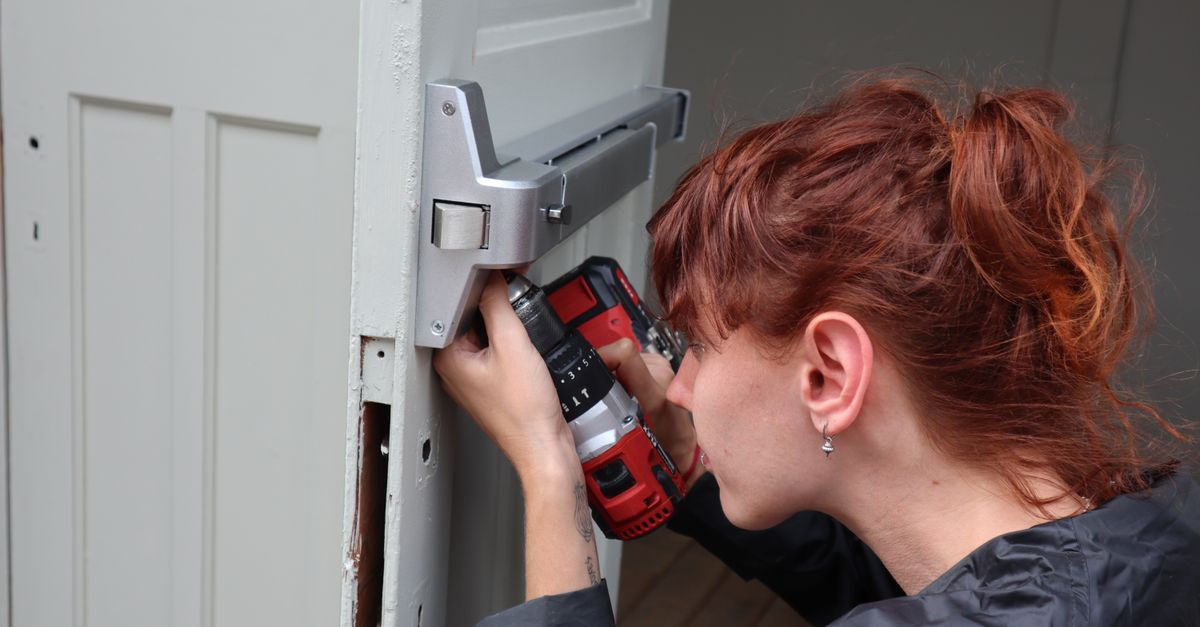
Panic exit hardware — rim devices, mortise exit devices, and vertical-rod systems — pairs with the mortise lock body to satisfy life-safety code requirements on designated egress doors. Texas building codes, aligned with IBC and NFPA 101, require single-motion, unobstructed exit on these paths. Servicing these devices demands familiarity with both the mechanical lock body and the exit-device chassis, dogging mechanisms, and coordinator sequencing on pairs of doors. Our technicians train on all of these systems so that every installation or repair meets both security goals and life-safety obligations.